
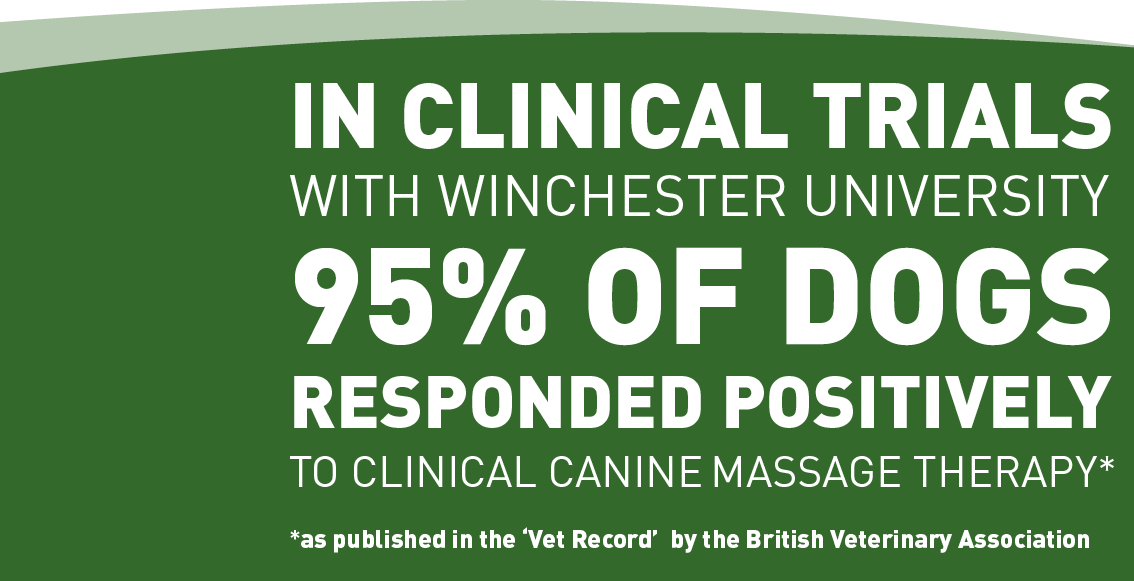
Canine Massage Guild is proud to announce that our ground-breaking clinical trials research into the efficacy of Canine Massage Therapy with Winchester University, is now published in Vet Record, a peer-reviewed
medical journal distributed by the
British Veterinary Association


Leading the way in results-based clinical canine massage

Clinical Trials Results
The results are in for the world’s first clinical trials to examine the efficacy of clinical canine massage with the University of Winchester and Canine Massage Guild.

Owner Zone
Download our free ‘5 Principles of Pain’ chart to help you identify the subtle signs that your dog could be employing to hide the fact that they are in pain.
Articles & News
Guild members share their extensive knowledge and experience covering a wide range of topics. You can also check here for our latest news.

Vet Zone
Our free, comprehensive Integrated Veterinary Care Initiative booklet explains just how clinical canine massage fits as part of your multi-disciplinary offering.
- Use our Therapist Register to find your dog’s local Canine Massage Guild registered practitioner
- Identify the symptoms of muscular pain with our ‘5 Principles of Pain’ download in the Owner Zone
- Read about the first canine massage methodology to be tested in Clinical Trials with leading universities
- Clinical canine massage therapy has helped thousands of dogs worldwide. Read more in our Articles and Testimonials
- The Vet Zone is specifically for vets, vet nurses, and practice managers. Our in-depth Integrated Veterinary Care Initiative takes a deep dive into our methodologies and explains how they can bring benefits to your vet-led team
The Canine Massage Guild for results you can see and your dog can feel

Did you know…
- 45% of your dog’s bodyweight is skeletal muscle… up to 55% in greyhounds
- Muscle is classed as soft tissue and it is often first to injure. When a muscle overstretches and tears it is called a strain
- Strains and other types of soft tissue injuries including trigger points, adhesions, sprains, and more, may cause symptoms listed in the 5 Principles of Pain
- We talk a lot about ‘fascia’, the body’s 3D web of connective tissue which, when dysfunctional, can cause not only chronic pain but also emotional and behavioural issues
- Massage is an ancient art which some call the ‘first therapy’. Today there are different massage disciplines aimed at treating different issues
Find your therapist
Canine Massage Guild members have trained for 2 years and specialise in soft tissue injury rehabilitation from injuries like strains, trigger points and myofascial pain which are commonly seen as lameness and slowing down. We also provide chronic pain management for orthopaedic conditions like arthritis and hip dysplasia resulting in improved comfort and mobility.
Results usually seen in 1-3 sessions.

Find a therapist in your area and put the spring back in your dog’s step!
 Our Labrador, Millie, has been on strong pain medication for osteoarthritis and she can act very strangely at times. After three sessions of Clinical Canine Massage, the whole family noticed how much younger she appeared, and how she was playing with other dogs again. Her strange behaviour has stopped, and we’ve got our Millie back! #labrador #arthritis
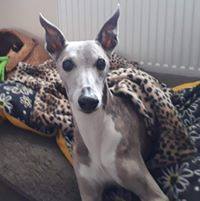 I noticed Daisy wasn’t managing a full body shake and was giving a little Yelp when moving her head. After a trip to the vet and nothing serious and pain relief for a few days. Amazingly the massage therapist managed to fix her with a few massages. Fantastic result for Daisy who is a whippet and although she is 12 can still be a bit speedy. Great to have a guild therapist there when we need her. #muscularinjury
 After reading an article titled “Arthritis in Old Dogs Doesn’t Have to Be a Death Sentence” I contacted my Guild Therapist for my elderly arthritic Spaniel Spud. After 3 sessions of Clinical Canine Massage Spud had a new lease of life. He was able to stop most of his medication and his quality of life in his last 6 months was the best it could be. I now take my other dogs for treatments. #spaniel #arthritis
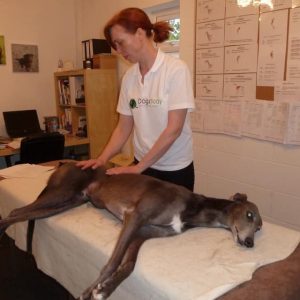 Our Guild Therapist massaged our ex-racing Greyhound Kevin for 7 years, as he had a number of racing injuries which caused him a lot of discomfort. Kevin loved seeing her as she was so calm and reassuring around him. His mobility always improved after Clinical Canine Massage. The passion of the Guild therapist for her job was clear, and it was always a pleasure spending time chatting with her about how much we loved our dogs. #rescuegreyhound
 My two dogs have been seeing Clinical Canine massage therapist for approximately the last two years. I have 10 year old German Shepherd and 4 year old Collie. My GSD gets a massage approximately every 12 weeks and I truly believe this has kept him supple and active coming into his older years. The Massage therapist is brilliant with the dogs, they are always relaxed and comfortable during the massages.
 Twix, a 7-year-old Jack Russell Terrier, and Dash, a 3-year-old Cocker Spaniel Terrier cross, are both competing agility dogs. Our Guild therapist is there throughout the season providing the expertise to spot even the slightest injuries, regular check-ups and Clinical Canine Massage treatments that ensure my dogs are in best condition to face the rigors of agility. #JackRussellTerrier #CockerSpanielTerrierCross #Agility
 Our Tia, who is 13 and has Intervertebral Disc Disease, only keeps ticking along being her wee happy self with Clinical Canine Massage. We really notice the difference after every session. Don’t know where we’d be without our Guild therapist! #IntervertebralDiscDisease
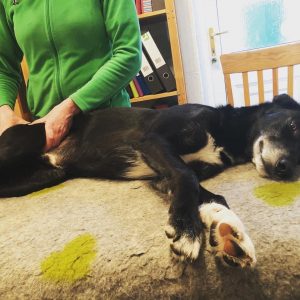 My Guild Therapist is utterly amazing with our 4 year old Lurcher x Collie Cody. He gets a regular massage to help him stay supple. She has also helped him with his jammed hamstrings from all the sprinting! He loves being on the table and is so happy after his treatments. I recommend her to all Cody’s doggy friends!! #lurcher #collie #muscleinjury
 Dilys is our 3 year old Boston Terrier. Clinical Canine Massage has kept Dilys in great shape for flyball. It has massively reduced the everyday niggles and progressive injuries she would have without it.
Clinical Canine Massage - discover the difference it can make to your dog!
Find a therapist
Have a look at our Register to find the Canine Massage Guild therapists in your area.
What to expect
Find out why your dog might need a massage and what to expect in our Owner Zone.
What people say
Read some of the many testimonials from satisfied Canine Massage Guild clients.