
Clinical trials
The Canine Massage Guild, in conjunction with Winchester University and University Centre Sparsholt, is conducting the world’s first ever clinical trials into the efficacy of clinical canine massage therapy and specifically the Lenton Method®.
The results are in! Click the button to the research results published in Vet Report
“This groundbreaking study is set to revolutionise the way we think about clinical canine massage therapy.”
Natalie Lenton – founder of the Canine Massage Guild and Canine Massage Therapy Centre, and creator of the Lenton Method®
Rationale for clinical trials
Although much anecdotal evidence exists, until now canine massage therapy has not been researched or tested academically. Evidence-based research considers patient values, clinical expertise and other information which helps owners and vets make more informed treatment decisions for dogs. The Canine Massage Guild is proud to be working with Winchester University and University Centre Sparsholt in this ground-breaking clinical trials.
Results
When the research paper is finalised the results will be published in research journals, veterinary publications, on our Facebook page and here.

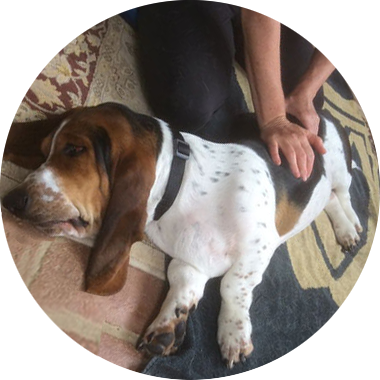
“Having the Lenton Method® selected by these prestigious universities for in-depth clinical trials will give us a scientifically-proven approach owners can trust and, we hope, will also raise the bar for the profession as a whole.”
Natalie Lenton – founder of the Canine Massage Guild and Canine Massage Therapy Centre,
and creator of the Lenton Method®

What’s under the microscope?
Specifically, these clinical trials on canine massage therapy will focus on the efficacy of the Lenton Method® which is what makes the service provided by Guild members so very different. What we do is muscular injury rehabilitation and chronic pain management, very far removed from just ‘dog massage’. All Guild members have trained in the Lenton Method® as part of their 2 year training and commit to regular reviews of their skill.

What is the Lenton Method®?
The Lenton Method® is a 3-tiered approach to the evaluation, treatment and re-evaluation of the canine patient who presents with soft tissue or musculoskeletal injuries and/or degenerative diseases like canine osteoarthritis.
 Advanced Palpation – the practice of informed touch involves the therapist’s ability to read and translate texture, tone tenderness and temperature of the many muscles of the body (the 4T’s) using a comprehensive and structured palpatory procedure. Guild therapists also utilise the ‘3 Interconnected Qualities of Fascia’ model (Luchau 2015) simultaneously with the 4T’s for assessment and re-evaluation of your dog’s soft tissues and fascial planes. A palpation or muscular health check will assess around 100 (50 pairs) muscles along with fascia which will be built upon during treatment. The therapists use a range of palpatory techniques alongside grip modulation and force control for a comfortable experience for your dog. Palpatory literacy is a key skill necessary for gaining a thorough picture of primary and secondary issues including overcompensation.
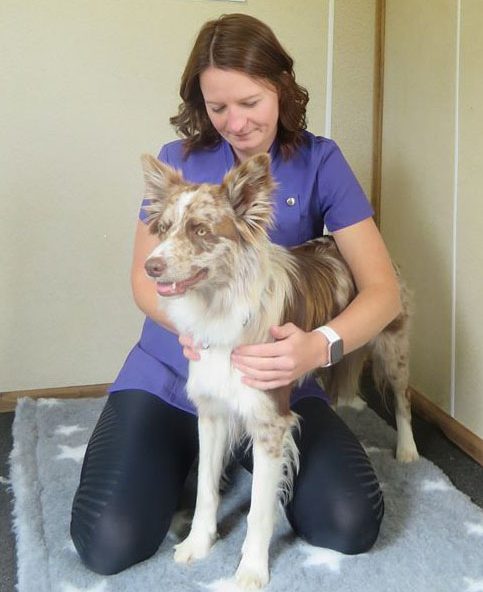
 BodyMapping – During their training, therapists commit to memory a comprehensive anatomical map of the dog’s musculature and fascia along with the precise locations of injuries which include strains, trigger points, hypertonicity and myofascial pain. This promotes consistency between practitioners and is utilised in conjunction with Tier 1: Advanced Palpation.
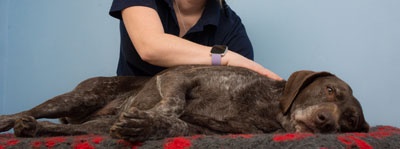
 The 7 Protocols – A series of complex direct myofascial releases to address chronic structural imbalance and fascial dysfunction as a result of soft tissue injury or degenerative joint disease. Following Tiers 1 & 2 the 7 protocols are preceded by Swedish, sports and deep tissue massage. The 7 Protocols are applied with often profound and long lasting results as determined by the indicators presented and outcome achieved and are a key factor in the success of the therapy.
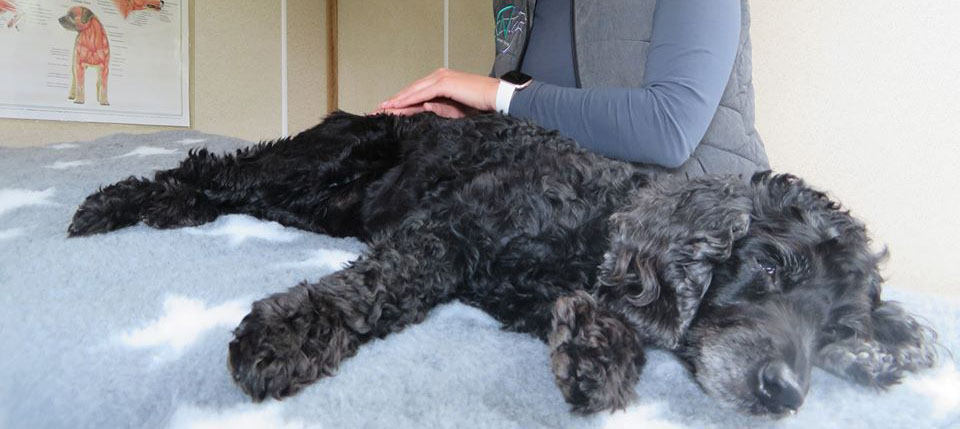
Clinical Canine Massage - discover the difference it can make to your dog!
Find a therapist
Have a look at our Register to find the Canine Massage Guild therapists in your area.
What to expect
Find out why your dog might need a massage and what to expect in our Owner Zone.
What people say
Read some of the many testimonials from satisfied Canine Massage Guild clients.