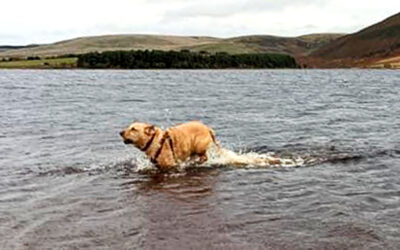
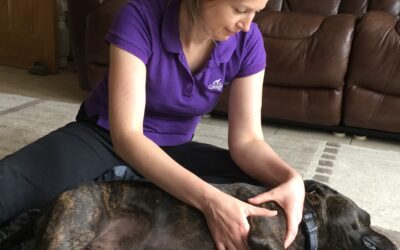
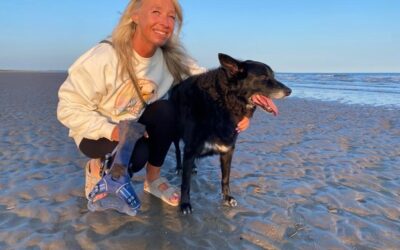
Massage works on the soft tissues, so may not always be the first thing that springs to mind when you consider how to help your dog when they have an orthopaedic condition like hip dysplasia. However, pain from the muscles and fascia (aka connective tissue) can make a significant contribution to the dog’s mobility and level of discomfort. And it won’t just be the tissues around the hips that are affected, as the dog moves differently to try and minimise the discomfort, muscles in other areas will become tense and overworked resulting in pain throughout the dog’s body. Massage can help to stop that cycle of pain where a new area overcompensates and becomes injured and painful.
What is hip dysplasia?
In a dog with hip dysplasia the ball and socket hip joint are abnormal and don’t fit together closely as they should. The dog is born with ‘normal’ hips and then develops looseness in the joint. Over time the joint deforms and then the wear and tear on the bone leads to osteoarthritis, causing the dog pain to move and put weight though the hip joint.
It’s commonly seen in large and giant breed dogs but can occur in any dog. Genetics are a contributory factor so it is seen in some breeds more than others. However nutrition, exercise, weight and daily activities will affect the development and severity so management is very important. The dog’s vet will be creating a plan for the management and ongoing monitoring of the condition. Adding a clinical canine massage therapist to your dog’s team can really help to manage their pain and maintain the mobility and high quality of life for longer.
During a massage the therapist is working on the soft tissues, so why would it help a dog with a joint condition?
Joints are moved, and held in position, by muscles and ligaments. This soft tissue is interlaced with a web of connective tissue (fascia) which all works together to hold the bones together and move the solid skeleton. (Read this article on how fascia affects pain levels in your dog for more information)
When a joint is unstable or painful the muscles and ligaments will work harder and/or differently to move the bones. This puts strain on the tissues in the immediate area and throughout the whole body as other areas (such as the lumbar area of the back, shoulders and neck) overcompensate when the dog moves differently to try to reduce the pain from the hip joint.
Over time, the soft tissue throughout the dog’s body can become painful from hypertonicity, trigger points (also known as ‘knots’), strains, spasm or adhesions. As an area becomes painful the body protects it and shifts again to use non painful muscles, and so on. A chain reaction of overuse is created throughout the body as it protects each new area of dysfunction.
Massage can stop this cycle of pain and overcompensation and work with the muscles and fascia to restore and maintain normal function and elasticity. So whilst it massage cannot change the hip dysplasia itself and the bony change, it can reduce the effects of that and reduce the dog’s pain levels because the muscles and fascia aren’t painful anymore.
Massage is also helping the body to move fluid through the tissues which will bring fresh blood with oxygen and nutrients to the area and flush away old waste. This will help keep tissues healthy and assist the body in clearing areas of inflammation.
Whilst massage therapy won’t prevent the dog from having hip dysplasia, it can help to manage the effects of the condition and is a valuable part of your chronic pain management plan. If muscles and fascia aren’t considered in your treatment you are not addressing all of the tissues and your treatment will not be as a effective.
What changes can I expect to see?
As the soft tissue starts to return to normal and increases in flexibility and elasticity your dog will move around more and look less stiff. You won’t just be stopping the chain of overcompensation from developing by having regular massage sessions, you will see the chain reaction in reverse as the muscle and fascia in each area are able to function more normally.
You can expect to see your dog’s quality of life improve as they go back to enjoying walks and life in general because they are in less pain and more flexible so moving is more pleasurable. Owners of older dogs often report that their dog is much more like their younger selves again.
Another change you may see is to your dog’s disposition. If they have become grumpy or withdrawn due to pain you are likely to see your dog return to their old selves as the pain reduces and they feel more mobile.
About the Author
 Sam Courtnell is a member of the Canine Massage Guild. She runs Thinking and Feeling Clinical Canine Massage, based in Stratford upon Avon & Coventry. You can find out more about her at www.k9-massageguild.co.uk/therapistregister/sam-courtnell
About the Canine Massage Guild
 After 10 years the Canine Massage Guild continues to lead the way, with a network of highly skilled Clinical Canine Massage Therapists, based around the country. We specialise in soft tissue injury rehabilitation and provide chronic pain management for orthopaedic conditions.
In clinical trials with Winchester University, which considered the efficacy of the Lenton Method ® of canine massage, 95% of dogs responded positively to clinical canine massage therapy. As published in ‘Vet Record’ by the British Veterinary Association.
Providing results you can see and your dog can feel!
Find your local Canine Massage Guild therapist: www.k9-massageguild.co.uk/therapistregister/