What is Spondylosis?
Most people will have heard spondylosis described as a fusing of the spine. This points towards a growing lack of flexibility in the spine but does not adequately describe what actually happens to the spine or why the pain associated with it can be so inconsistent. The symptoms and associated pain vary depending on how advanced the condition is in a vertebral pairing. Let me explain the changes going on in your dog’s body.
In the early stages of the disease you will probably notice a general stiffness in your dog, a reluctance to jump or intermittent lameness. This will caused by a steady, chronic pain as the spurs grow through soft tissue causing inflammation and discomfort. As the spine flexes, especially when jumping, the muscles running alongside the spine can get pinched causing pain and localised bruising. Ice can assist in numbing pain and reducing inflammation, together with some light effleurage to remove damaged cells and flood the area with healing nutrients.
As the spondyles become more advanced and the spurs almost meet, tissue and nerves can become trapped in the shrinking gap. This can cause sharp, debilitating nerve pain. I’m sure you know yourself how excruciating and immobilising it is to have a trapped nerve. Ice is useful during this kind of flare up. It helps to reduce inflammation in the tissue, allowing the nerve to disentangle.

When the spurs meet and the joint no longer articulates a ‘bridge’ is said to have formed. Once this happens the pain associated with the growing spurs is gone. This is good news for the local area but for the whole dog this will result in areas of overcompensation developing due to the lack of mobility in the spine. The effect of this will be trigger points, knots and myofascial pain in muscles that now have to work harder to perform everyday actions.
Since spondylosis does not act on every vertebra at the same time the nature of the disease is such that as one area is fusing and causing less pain another pair of vertebrae are in the initial stages of the disease. The bridges that form are made of brittle bone which can break with a heavy landing from a jump, leaving sharp shards which can again stab into soft tissue.
Spondylosis And Medication
Dogs suffering from spondylosis will often be treated with NSAIDs (non-steroidal anti-inflammatory drug) like Metacam, Previcox and Loxicom. These will relieve pain by reducing inflammation. If something stronger is required then you may be offered an opioid like Tramadol which works by interrupting the pain signals in the brain. However, more and more people are becoming concerned about the effects of long-term use of pain control using drugs.
Can Therapeutic Canine Massage Support My Dog With Spondylosis?
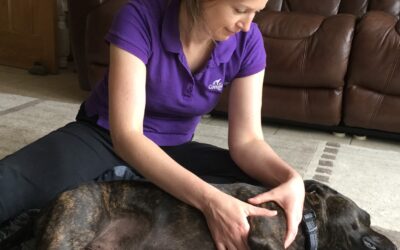
It certainly can! Canine Massage is a useful, non-invasive tool to help manage the pain of spondylosis (especially for dogs who cannot tolerate NSAIDs). It is a holistic therapy, which means we treat your whole dog by:
- Reducing inflammation thereby helping to reduce pain
- Assisting in the removal of metabolic waste and damaged cells from the body’s tissues
- Relieving tension, trigger points, knots and myofascial pain that develop in the areas of overcompensation which in turn improves your dog’s overall mobility
- Releasing endorphins, the body’s natural pain killers
- Improving your dog’s mood and sense of well being
- As your dog is probably receiving less exercise you may be finding it difficult to control their weight – massage can assist by improving metabolism.
How Do I Know If My Dog Is In Pain?
- Pacing, don’t know where to put themselves
- Trouble getting up / lying down
- Difficulty managing the stairs
- Wide, staring eyes
- Appear to be sleeping but actually awake
- Grumpy with other dogs, and possibly humans
- Want to go home early on walks
- Limping / lameness, not fully weight-bearing on one or more legs
- Holding a leg out / stiff legged walk
- Arched back and / or low head
- Panting
- Licking lips.
Other Useful Hints To Keep Your Dog Comfortable

It is important to keep your dog warm and comfortable. I keep furry blankets, soft teddy bears and cushions around the floor to provide a range of surfaces to curl up on. Sometimes my old girl doesn’t want to lie flat so I’ll pile everything up so she can rest over it and find a place where she is supported.
You can also:
- Remove environmental stress like loud music and keep active children out of the way
- Supplements like Omega-3 fatty acids, MSM, glucosamine and chondroitin similar to those used with arthritis can support the joint and reduce inflammation
- Turmeric also appears to have excellent anti-inflammatory properties
- Make it easier for you dog to move around the house by placing non-slip rugs on any slippy flooring
- Work with a Canine Massage Guild therapist to help keep muscles fit and healthy and to reduce the risk of physical injury.
Author: Catriona Dickson
For further information please visit Catriona Dickson‘s biography