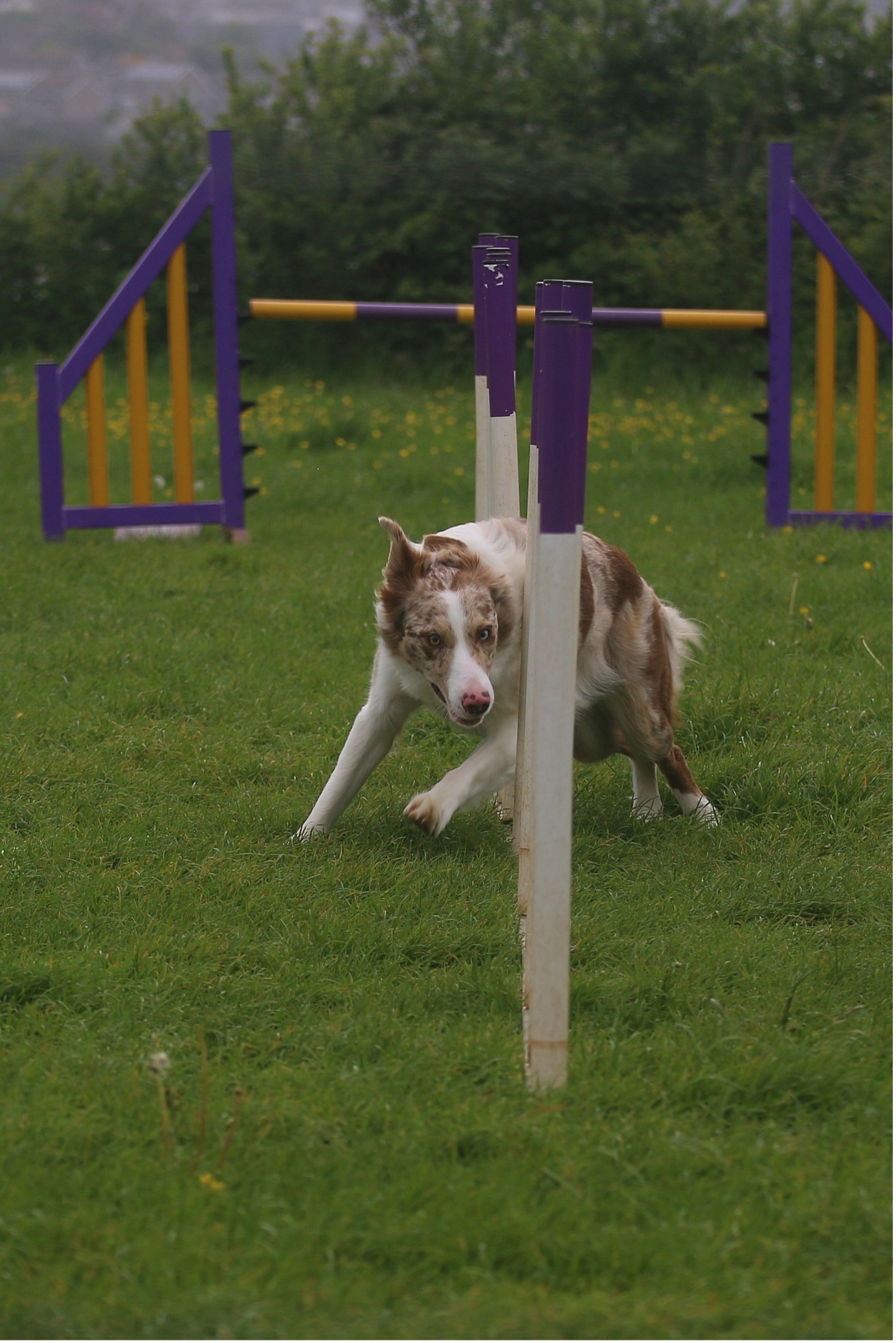

The dog’s shoulder joint is highly mobile, allowing for a wide range of movement, but this mobility also makes it susceptible to injury. Shoulder injuries are common in agility dogs and the main causes are:
- Abrupt changes in direction.
- Sudden stops.
- Impact with obstacles and other dogs which can cause the shoulder to dislocate.
- Falls and awkward landings.
Could your dog have injured their shoulder?
Signs will vary between dogs and the severity of the injury, but the most common signs of a dislocated (luxated) shoulder are:
- Acute, sudden lameness in one leg.
- Swelling and bruising around the shoulder.
- Decreased movement with the dog unable to fully extend or flex the affected leg.
- Signs of pain including whining, whimpering, trying to exit the ring or displaying signs of distress including ‘whale eyeing’, licking the lips, shivering, or freezing in place.
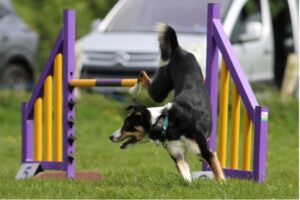 Many dogs will not experience a full joint dislocation, but agility dogs are at a higher risk of shoulder injuries. Repetitive actions in training and competition can lead to over-use injuries, small strains and sprains, which over time can cause the shoulder joint to become less stable. This wouldn’t be diagnosed as a luxation, but any shoulder instability increases the risk of further damage and will result in arthritic changes in the joint over time.
Things to look for in your dog that might indicate some instability and pain in the shoulder joint include:
- Intermittent or persistent lameness which gets worse with exercise.
- Localised swelling and touch sensitivity.
- Changes in posture to reduce weight bearing on the affected limb.
- Difficulty standing up from a down position.
- Choosing to lie down on one side only – with the unstable shoulder uppermost.
- Changes in the way your dog lies down, particularly with a wide front leg position.
- Coat changes including changes in directions, texture and sometimes colour.
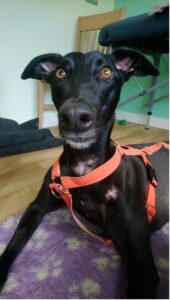 Symptoms can be subtle and may only show up when your dog is training or competing. Things to look for include:
- Consistently slower times.
- Reluctance to weave, coming out early or moving slower through them.
- Wider turns – usually only in one direction.
- Falling onto the inside shoulder on a turn – which would usually indicate an issue with the outer shoulder.
- Reluctance to jump or refusing to turn immediately on landing a jump.
Diagnosis
If you suspect your dog has a shoulder injury the first step is to seek veterinary advice. In addition to a physical exam the veterinarian may need to organise imagine such as x-rays and CT Scans.
Treatment for a shoulder injury in agility dogs typically involves
- Pain management: In most cases your vet will initially suggest medications such as Metacam to alleviate pain and reduce inflammation. If your dog has shoulder instability the anti-inflammatory medications may have no or limited benefit.
- Rest and restricted activity: The body is designed to heal itself and, for minor injuries, it can be extremely efficient at doing so as long as it is able to rest. Avoid strenuous activities and prevent sudden movements and direction changes to allow the joint to heal properly. This includes preventing your dog jumping into and out of the car or accessing furniture. If you haven’t already done so, ensure all hard floors the dog is moving around on are covered with non-slip mats.
- If dislocated, a closed reduction might be attempted. This involves the veterinarian attempting to manipulate the joint back into its normal position under anaesthesia.
- In severe or recurrent cases surgery may be required to stabilise the joint and prevent further dislocations.
- Rehabilitation: Once the initial rest phase has been completed it is sensible to start gently getting the dog back to fitness. Managed exercise and clinical massage can speed up the recovery process, strengthen the shoulder, and prevent future injuries. Indeed, massage and gentle exercise corrects* the body allowing healing to take place.
*A note on correction – any body, yours or your dogs, will subconsciously adjust how it moves to work around an injury. But if the injury doesn’t heal well or takes a bit of time it can become fixed in this new pattern of movement which can cause lameness and pain. It is for this reason that I would recommend any dog that has suffered an injury has some form of bodywork such as Clinical Massage as part of their rehabilitation.
As shoulder injuries can vary in severity, the treatment will vary depending on each individual case.
Clinical Massage and your injured dog
Whilst Clinical Massage cannot ‘fix’ a dislocated shoulder joint, it can aid in the overall recovery process in the following ways:
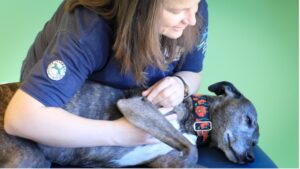 Pain Relief: Massage therapy helps alleviate pain and discomfort around the affected joint, but it can also relieve the pain in other parts of the body that are working harder to allow the dog to continue moving around their injury.
- Reducing Swelling and Inflammation: Massage techniques such as effleurage and lymphatic drainage can reduce swelling and inflammation in the affected area, helping to remove excess fluid which also provides pain relief.
- Relaxation and Stress Reduction: Injuries can cause stress and anxiety in dogs just like they do in us. Massage therapy calms the mind, promotes relaxation and increases the release of stress relieving hormones that help the body to heal and the mind to become less worried.
- Increasing Circulation: Massage stimulates blood flow to the affected area, which delivers essential nutrients, oxygen and the immune cells needed for tissue repair and healing. Improved circulation also assists in removing metabolic waste products and cellular debris which can be another source of localised pain for your dog.
- Promoting Range of Motion: After the initial phase of healing, when the shoulder is stable and the veterinarian approves, deeper, more focused massage techniques and passive range of motion (stretching) can help gently mobilise the joint and surrounding tissues. This reduces stiffness, improves joint flexibility, and returns the body to pre-injury mobility.
- Scar Tissue Management: As the dog’s recovery progresses, massage can help remodel the initial scar tissue using gentle cross-fibre friction and myofascial releases. Scars are initially very haphazard in the way the collagen fibres are laid down as the initial priority is to ‘bridge’ the damage. Massage helps the collagen fibres in the scar tissue to re-align with the surrounding undamaged tissue, improving tissue flexibility and movement. Massage can also break down and reduce adhesions (where tissues get stuck together) and increase lubrication of the area making movement more comfortable.
Massage therapy can speed up the recovery process
It’s important to note that massage therapy should be conducted by a well trained and experienced therapist. Your therapist should have a good understanding of canine anatomy, proper techniques, and use precautions specific to shoulder injuries. This is where the Canine Massage Guild comes in. All Guild therapists are fully trained, insured and work to a code of ethics that means you can be confident in the quality of support your dog will receive.
Massage, like any therapy, should be respectful to the dogs needs and pain levels. Your therapist should be attentive to your dog’s responses and work within the dog’s pain tolerance. Every session should be adjusted to meet the current needs and so no two sessions could look exactly the same.
In summary, Clinical Canine Massage can support the rehabilitation of shoulder injuries by promoting pain relief, reducing swelling, enhancing circulation, reducing stress, and aiding in tissue healing.
Prevention: To reduce the risk of shoulder injury in your agility dogs, consider the following measures
-
- Proper warm-up and stretching before intense exercise or performances. Do not use a tug toy as your only warm up exercise.
- Training and conditioning: There are specific exercises that can help strengthen and build resilience and thereby reduce injury risks. Do not be tempted to train for too long or too often.
- Technique and handling: Many shoulder injuries occur as a result of repetitive or excessive training. Focus on good handling, with and without the obstacles, as well as good posture, core strength and body awareness. Remember a slower dog will often win in the ring because they are more precise in their movement.
- A good cool down routine can ensure your dog recovers faster from each training session and competitive run. It helps:
-
-
- flush the hot tissue of metabolic waste material and any cellular debris,
- ensures the tissues cool and return to resting tone effectively,
- reduces the risk of post exercise aches and pains.
-
-
- Regular massage will help find and treat any areas of soreness or small injuries which will prevent the dog subconsciously adjusting their movement to work around such areas.
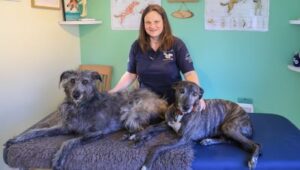 About the Author
Karen Young is a member of the Canine Massage Guild. She runs Safe Hands Clinical Canine Massage based in Hemel Hempstead & also offers Canine Conditioning. You can find out more about Karen at https://www.safehands.dog/uk
About the Canine Massage Guild
 After 10 years, the Canine Massage Guild continues to lead the way with a network of highly skilled Clinical Canine Massage Therapists based around the country. We specialise in soft tissue rehabilitation and provide chronic pain management for orthopaedic conditions.
In clinical trials with Winchester University, which studied the efficacy of the Lenton Method®, 95% of dogs responded positively to clinical canine massage therapy. Available here, as published in ‘Vet Record’ by the British Veterinary Association.
Providing results you can see and your dog can feel!
Find your local Canine Massage Guild therapist: www.k9-massageguild.co.uk/therapistregister/