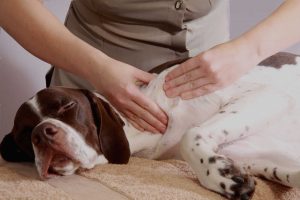
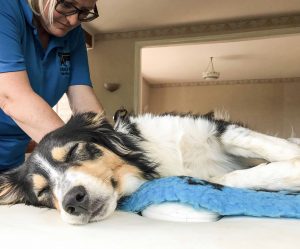
 DID YOU KNOW? – that Clinical Canine Massage, far from being a simple ‘pampering’, actually affects virtually every part of the dog’s body, either directly or indirectly, influencing all 11 SYSTEMS! Each system has a specific function, which constantly works in conjunction with all other systems to maintain natural balance and efficient working – called ‘homeostasis’. Here’s how each system benefits from regular massage to keep optimum homeostasis in the whole of the dog’s body
1. THE SKELETAL SYSTEM
The dog’s skeleton is made up of approximately 320 bones (tail length dependent) and is the scaffolding of the body which provides a framework to which muscles can attach, thus enabling movement and functionality. It houses bone marrow which produces red blood cells, which carry oxygen around the body. Calcium is stored in the bones which ensures proper functioning of the nervous and muscular systems. The framework provides protection, in particular from the ribs and skull which protect vital organs of the heart, lungs, liver and brain. Massage helps to maintain range of motion – tight muscles can create added pressure on joints that can actually pull bones out of place. Increased mobility of joints helps to reduce joint stiffness and pain, decrease the onset of osteoarthritis by dysfunctional joints, help the lubricating fluid within joints, called synovial fluid, to keep joints free and supple. Increased circulation and removal of toxins from muscles by regular massage keeps fresh oxygen and nutrients supplied to the bones, which are living tissue and constantly being re-absorbed and regenerated.
2. THE MUSCULAR SYSTEM
The approximately 700 muscles within the dog’s body produce movement via muscles contracting to pull on the bones so the dog may move, jump, run and produce facial expressions. The muscles cross over various joints and are always working in pairs (e.g. biceps and triceps). 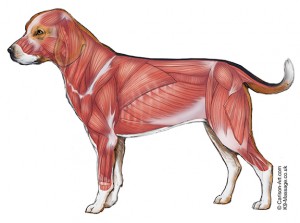 Massage helps by influencing the tone, length and structure of the muscle, seeking to resolve hot spots caused by inflammation; adhesions caused by over-exertion and over use; it can aid in the repair of torn or ruptured muscles; drain lymphatic fluid from the muscles which causes swelling; it can help to destroy areas of scar tissue that affect how the muscle should work and cause restrictions; it can eliminate trigger points or ‘knots’ which cause severe discomfort or pain and restrict the muscle’s flexibility; it relaxes and stretches muscles, reducing muscular tension and cramps; muscles tired by exercise, repetitive strain and stress are restored much more quickly by massage than by rest alone. Muscular injuries and strains can occur from many causes, often some very simple and trivial, causing pain and discomfort. A dog in pain or discomfort is an unhappy, and possibly grumpy or even aggressive dog. By encouraging muscles to relax, work can be done on areas causing discomfort, pain and distress, having a positive effect on return to health, or maintenance of good health, improving the dog’s psychological state as well as physical state, and being the catalyst for the dog’s internal self-healing that is present in all of us.
3. THE NERVOUS SYSTEM
The ‘central control panel’ for the rest of the body, consisting of the brain, the spinal column and nerves, which both send messages to the brain from information received both internally and from the outside world, and receive messages from the brain based on the processed information, allowing an appropriate response to the situation by activating the relevant muscles. There are two main parts to the nervous system, the parasympathetic (rest and digest), and the sympathetic (fight or flight). By stimulating different areas of the dog’s body, the dog can be either relaxed or invigorated using different massage techniques, movements and intention. It can relax and calm; it can aid the dog’s sleep; release nerve compression and nerve pain; raise endorphin levels to promote healing and a happy disposition; it can prepare dogs for training and competition; and it generally balances the dog’s energies.
4. THE RESPIRATORY SYSTEM
 The respiratory system delivers fresh oxygen to the blood and removes carbon dioxide from the deoxygenated blood, allowing it to take up fresh oxygen and re-circulate once again. Massage can reduce congestion in the lungs caused by allergy and infection and loosen tight muscles around the chest area which may inhibit full lung capacity, and therefore reduce the quantity of oxygen absorbed into the blood. Breathing will slow as the dog relaxes during massage, expending less energy and deepening each breath, thus increasing the amount of oxygen being delivered to the body.
5. THE CIRCULATORY SYSTEM
Consisting of the ‘pump’ which is the heart, arteries which carry oxygenated blood carrying nutrients and hormones to every single part of the body and veins which return deoxygenated blood carrying metabolic waste back to the heart and then lungs for gaseous exchange. The blood consists of red blood cells for oxygen and white blood cells for immunity and infection-fighting and plasma. Massage can enhance this circulatory process, reducing the work of the heart and helping the function of the circulatory system, aiding and speeding-up the detoxification process, improving the immune system of the dog. This is especially helpful for dogs who are immobile through injury, illness, reduced-mobility due to age, etc. It will result in faster healing times and shorter recovery from illness and injury.
6. THE LYMPHATIC SYSTEM
The ‘waste disposal network’ of the body, the lymphatic system follows the route of the circulatory system. Lymphatic vessels collect bacterial and viral invaders which are taken to the lymph nodes, which break them down and eliminate them. The spleen filters blood to fight infection and destroys red blood cells approx. 120 days old. Massage promotes lymphatic drainage and decreases swelling within an area so lymph can be returned and cleansed. Massage also stimulates lymph circulation and boosts the immune system.
 7. THE DIGESTIVE SYSTEM
The digestive system processes food enabling the cells to use it for energy and fat storage as the cells distribute the nutrients via blood. Waste is eliminated through the kidneys, water is absorbed through the small intestine, calcium is stored in bone and proteins go to muscles for repair and regeneration. Massage stimulates peristaltic movement of food and waste products through the digestive system; excretion of the bowel can be enhanced by specific movements upon the small intestine, especially useful for constipation.
8. THE URINARY SYSTEM
The urinary system produces, stores and eliminates urine. The kidneys filter waste from the blood, regulate water, electrolyte balance and maintain the correct pH balance in the body. The kidneys are important for homeostasis. Waste products that are released during a massage find their way via the blood to the kidneys where they are filtered out and eliminated. This helps the body rid itself of toxins, as dogs will tend to drink more after a massage and therefore urinate more, thus flushing through a greater amount of toxin waste via the urinary system.
 9. THE ENDOCRINE SYSTEM
The endocrine system regulates hormones within the body, which are secreted into the circulatory system and their target is main organs. Hormones that are secreted include regulation of calcium storage, reproductive hormones that regulate copulation and adrenaline which increases the blood pressure and heart rate. Massage stimulates metabolic function and benefits hypothyroidism.
10. THE REPRODUCTIVE SYSTEM
To reproduce is one of the most basic instincts of most animals. Sex hormones produced by the ovaries and testes and regulated by the endocrine system are important for reproductive purposes and also the development of male and female characteristics. Massage can benefit the reproductive system through the improvement of circulation to deliver sex hormones, and to relax the muscles.
11. THE INTEGUMENTARY SYSTEM
Consists of the skin, hair, skin glands and nails, the skin’s job is protection from dehydration and infection; it houses millions of sensory receptors to touch and feedback to the nervous system to respond to hazards; it is the largest organ of the body and regulates body temperature, produces Vitamin D and houses various glands. Massage increases circulation which brings blood rich in oxygen and nutrients to the dermal layer of the skin. Massage can help improve skin and coat condition by wringing blood into the rich dermal layer. It helps to distribute sebum which lubricates the skin and hair.