
Massage can be used in reference to the show dog mainly to improve gait and resolve movement issues. However, showing is a very different discipline to working and agility and the use of massage seems, in my experience, generally less attractive to owners.
For dogs involved in agility/obedience and working trials, physical ability and stamina feature very heavily but in showing there is also a cosmetic element and in many coated breeds this can hide a multitude of sins. The show environment obviously promotes pedigree dogs, bred selectively over the years to conform to a blue-print or standard that is driven by purpose and appearance. This brings its’ own issues particularly in relation to basic conformation that can significantly change what is regarded as a ‘normal’ gait and range of motion for that breed when compared say to a cross breed agility dog and something that every canine masseuse should be aware of. As show dogs are not required to do strenuous physical tasks in the ring to the same degree in comparison to say an agility dog, issues identified are likely to arise through:
- Conformation – if the dog is constructed in a particular way, muscle strain/spasm is more likely to occur. One example is the Dachshund that has been selectively bred over many generations to achieve a unique length of back to leg ratio.
- Lifestyle – dogs that are kennelled can sometimes sustain muscle strains /spasms through jumping up or bouncing in their run /kennel.
- Dogs of different ages free running together – younger dogs often suffer injuries from being rough – housed by older dogs
- Travel to and housing at shows – prolonged periods of confinement in crates can affect muscle function. So, as a canine masseuse observing from the side of the ring, what would I be looking for?
- Balance on the stand – does the dog stand fore square without being ‘stacked’ or does it have a tendency to ‘kick’ a leg in when allowed to free stand? Is there symmetry in the muscles or does one side show a degree of wastage?
Bearing in mind the normal gait for that breed, is the dog exhibiting uncharacteristic movement such as pinning, crabbing or pacing. Is the dog relaxed and happy in it’s environment or nervous/miserable? If any of these symptoms are exhibited, massage should undoubtedly help.
Let’s look at the gait irregularities that most show people will recognise. Some are purely down to conformation but others can be the result of muscular issues:
- Pinning – Mainly due to conformation or lifestyle when developing
- Hackneying – Again, can be due to conformation but can be caused by muscular tightness of the neck, front of the shoulders and extensor muscles of the forelimb.
- Crabbing/Sidewinding – This can be as a result of a bad habit, lower back pain, spasm in the Serratus Thracicus muscle or may be as a result of a vertebra out of place in the complex spinal column (a Mctimoney Chiropractor treatment should be sought if possible). The dog may be ‘unbalanced’ as a result of injury, collision or impact and is holding an issue in its muscular system.
- Paddling– Can be caused by natural genetic over angulation of the joints or may be caused by muscular tightness in the shoulder area. Tightness within the tendon of the tricep muscle may also contribute to this poor movement.
- Single Tracking – Can be caused by excessive tightness in the hamstring group of muscles ie: the very backs of the back legs(semimembranosus, semitendinosus & biceps femoris) by lengthening these muscles a skilled canine masseuse can help the dog to achieve greater comfort when walking, trotting and showing. Single tracking on the front limbs often goes with pinning as discomfort has knock on effects to the rest of the body as the dog tries to overcompensate.
- Winging – May be due to natural conformation or tightness in the flexor muscles of the fore leg
- Pacing – The bain of the exhibitor! Pacing may be a learned behaviour, may be a result of muscular injury, shortening or scarring, under development of the shoulder muscles, poor skeletal conformation or bad habit.
By identifying the above physical anomalies and treating the issues with massage, I would be looking to improve movement and soundness, enhance muscle tone and improve posture. It is also important to consider mental issues and dogs that have had a bad experience or are naturally more reserved can benefit greatly from the influence massage can exert on the nervous system.
Massage can be used to stimulate the parasympathetic nervous system to relax a dog and by changing the rhythm and massage stroke, a masseuse can stimulate the sympathetic system to energise the lethargic or laid back show dog to produce that extra sparkle. Massage is also an invaluable tool to introduce acceptance of touch to those dogs that are naturally touch sensitive or hand shy or those that have had a bad experience in the show ring.
So, having established that massage can help with issues common in show dogs what else can you do to ensure that you keep your dog in the best possible shape for their showing career? Look carefully at their home environment – try to alleviate excessive repetitive jumping/bouncing in runs/kennels – dogs aren’t meant to pogo! If they are inside and you have tiled/laminate flooring, make sure there are plenty of mats to prevent slip injuries. Get rid of those plastic beds! Allow your dog to move and stretch while at rest. Be careful when mixing dogs of different ages/sizes to prevent injuries during play.
Ensure that journeys to and from shows are broken to allow the dog to stretch its’ legs – we all know how uncomfortable it can be to stay in a confined space for a long time. Consider giving your dog Arnica when arriving at a show to alleviate stiffness. Never take your dog straight from the bench to the ring – warm up for 10 minutes if possible either through exercise or massage. Why do I think massage is fantastic for the show dog?
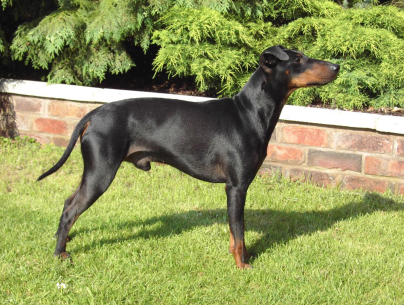
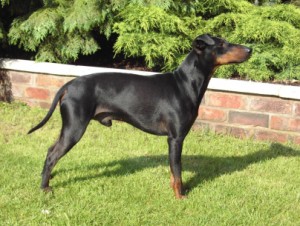 This is Chester – the love of my life. He is the whole reason why I became a canine massage therapist. He was already a Champion but I really wanted that 4th ticket to ‘seal the deal’ but could only achieve reserves. Having attended a seminar about massage Chester had a treatment that identified issues with his quadriceps and hamstrings. Six weeks after that at his first Championship show he got that long awaited 4th ticket. Never be afraid to consult a massage therapist if you think there is a problem. Guild members work to a code of confidentiality so the only person who knows your dog has been treated is you. We would like it however if you could share successes and make this a treatment available to benefit show dogs in their quest for top honours.
Author: Helen Braybrook
For more information visit Helen Braybrook’s biography